
How to Read to a Toddler Who Won't Sit Still
Learn how to read to a toddler who will not sit still using short books, movement-friendly routines and realistic signs that they are listening.
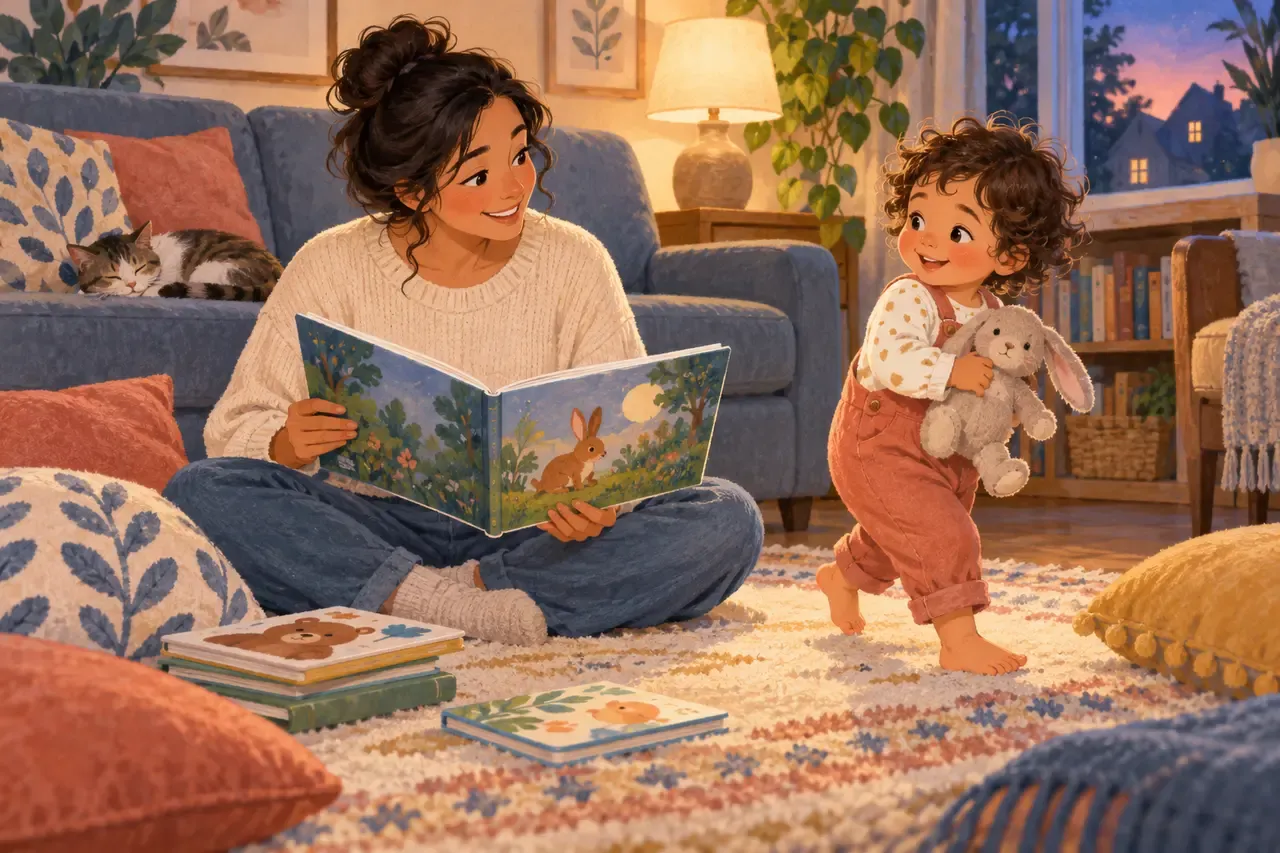
Your toddler does not have to sit perfectly still to benefit from a story. Keep the first reading short, let them stand or hold a quiet toy, follow what catches their attention and stop before the book becomes a struggle. Look for signs of listening rather than a motionless body.
A toddler who turns away may still repeat a line, react to a familiar moment or return for a favorite picture. The goal is to build a positive relationship with stories—not to practise sitting still.
What listening can look like at toddler age
Adults often picture shared reading as a child tucked against a parent’s shoulder from the first page to the last. Some toddlers enjoy that. Others listen while changing position, carrying a toy, touching the pictures or walking a small loop around the room.
Nemours KidsHealth makes the point directly: sitting still is not required. Its medically reviewed toddler reading guidance notes that some busy toddlers stand while an adult reads, look at only a page or two, or play with a favorite toy while continuing to listen.
Instead of measuring attention by posture, watch for small responses:
- glancing back when the page changes;
- joining a repeated phrase or animal sound;
- laughing or reacting at the expected moment;
- bringing the book back later;
- pointing to a picture;
- answering a simple question after moving away;
- asking for the same story again.
These signals are not a test your child must pass. They simply help you notice that listening can be active and uneven.
Reset the goal before you open the book
For tonight, replace “We will finish this book” with “We will share a pleasant few minutes with a story.”
That change makes it easier to skip a page, describe a picture or stop early without feeling that reading failed. Toddlers are learning what books feel like as much as they are following plots. A calm two-page interaction can support that relationship better than a tense march through twenty pages.
If the book is unfamiliar, preview it quickly first. Notice where the text gets long, where a repeated phrase appears and where you could finish naturally if attention fades.
Choose a book built for active hands
The right format removes much of the conflict. For children around ages 1 to 3, look for:
- sturdy board pages that are easy to turn;
- one clear picture or action per spread;
- short, rhythmic sentences;
- repeated lines your child can anticipate;
- familiar subjects such as animals, vehicles, meals or bedtime;
- flaps, textures or objects to find when those features do not become distracting.
KidsHealth recommends books with small amounts of text and topics the child already likes. It also suggests repetitive language for older toddlers who are beginning to “read” along from memory.
A complicated plot is not automatically more valuable. At this age, participation often matters more than reaching a surprising ending.
For a simple repeated pattern, try The Little Red Hen. If your toddler enjoys animal characters and a clear act of helping, The Lion and the Mouse is another approachable choice.
Start with one page, not one whole book
Make the opening easy to accept. Sit where your child already feels comfortable, show the cover and begin without a long instruction to settle down.
You might say:
“I’m going to read this page. You can sit with me or listen while you play here.”
After one spread, continue if the moment still feels good. This is not a trick to make your child complete the book. It is a way to remove the struggle that can begin when an adult announces a large expectation before reading starts.
If your toddler walks away completely, finish the sentence and pause. They may return. If they do not, close the book warmly and try again at another time.
Give movement a boundary instead of banning it
Movement-friendly reading still works best with a simple physical boundary. A child can stand on the rug, hold one soft toy or move between two cushions while the book stays with the reader.
That is different from chasing a toddler from room to room while competing with noisy toys. The boundary keeps the story available without demanding a specific pose.
Try one of these arrangements:
- The rug: your child can sit, kneel or stand within a small reading area.
- The helper: your child turns the page when you say a cue word.
- The prop: they hold one toy connected to the story, such as a stuffed animal.
- The picture stop: you read a page, then let them come close to find one object.
Choose one arrangement at a time. Too many props and choices can turn the book into background noise.
Let your toddler lead without losing the story
Toddlers may turn three pages at once, return to the cover or insist on naming every animal. This is normal shared reading, not incorrect reading.
Follow their attention briefly, then offer a gentle bridge back:
- “Yes, that is the red truck. Let’s see where it goes.”
- “You found the moon. Now the bear is looking up too.”
- “You want this page again? We can repeat it once.”
You can summarize skipped text rather than pulling the pages backward. If your child points to the same object repeatedly, name it, add one useful detail and continue: “A dog—a small brown dog. The dog is following the girl.”
This keeps the exchange conversational without turning every picture into a quiz.
Try a different time, not only a different book
A toddler who cannot engage at the end of a tiring day may enjoy the same book after breakfast or before a nap. Reading at bedtime is useful because it can become a familiar cue, but bedtime does not have to carry the family’s entire reading habit.
The NHS guidance for young children’s sleep recommends a calming, predictable wind-down and suggests setting a clear limit, such as one story before goodnight. If storytime regularly becomes chaotic, move it a little earlier in that wind-down—before your child is at the edge of sleep.
You can also keep a very short familiar book for bedtime and explore longer or more interactive stories during the day.
Know when your toddler has had enough
Movement alone does not mean the session should end. Look at the whole pattern.
Keep going when your child is moving but still checking the pictures, joining sounds or staying near the story. Consider stopping when they repeatedly push the book away, become upset, move to a different activity or no longer respond to anything happening on the page.
Use a neutral ending:
“We’re finished with the book for now. We can try again later.”
Avoid using the unfinished book as a threat or bargaining tool. You want stopping to feel ordinary, not like a punishment.
If you are unsure how much reading fits the evening, our guide to bedtime story length by age offers flexible starting points. Attention and mood still matter more than a fixed number of minutes.
A simple seven-night experiment
Changing the routine every night makes it hard to learn what helps. Try the same small plan for one week:
- Offer a choice between two short books.
- Read in the same comfortable place.
- Allow one quiet toy or free movement on the rug.
- Invite one action: turn a page, make a sound or find a picture.
- Stop calmly when attention is gone.
After seven nights, ask practical questions. Did reading work better before pajamas or after them? Did repeated books hold attention longer? Was the toy helpful or distracting? Did your child listen better beside you, across the rug or while tucked in bed?
Keep what worked and change one thing at a time.
What about narrated stories and read-along apps?
Audio can help on nights when a parent is tired, but it should not turn storytime into endless background entertainment. Keep the device stationary, reduce unrelated tapping and listen together when possible.
TuneTales’ read-along experience pairs narration with highlighted text. For an active toddler, the adult can keep the story visible while the child moves nearby, then invite them back for a favorite picture or repeated line.
The same rule applies to print and digital stories: the child does not need to stare at every word for the experience to count.
When to ask for additional guidance
Not sitting still during a book is common toddler behavior on its own. It does not diagnose an attention, hearing or language problem.
If you have broader concerns—such as your child rarely responding to voices or sounds, losing skills they previously used, or struggling to communicate across many everyday situations—bring those observations to your pediatrician or health visitor. They can consider the full picture rather than one difficult storytime.
Keep the invitation open
Read a little, leave the book accessible and try again later. Let your toddler move without letting the story disappear into noise. Repeat the lines they love and stop before frustration takes over.
Successful toddler reading may look less like a quiet photograph and more like a child circling the rug, calling out the final word and returning to turn the page. That still counts as sharing a story.