
When Should You Start Reading Bedtime Stories to a Baby?
You can read bedtime stories to a baby from birth. Learn what reading looks like by age, how long to read and how to build a calm routine without pressure.
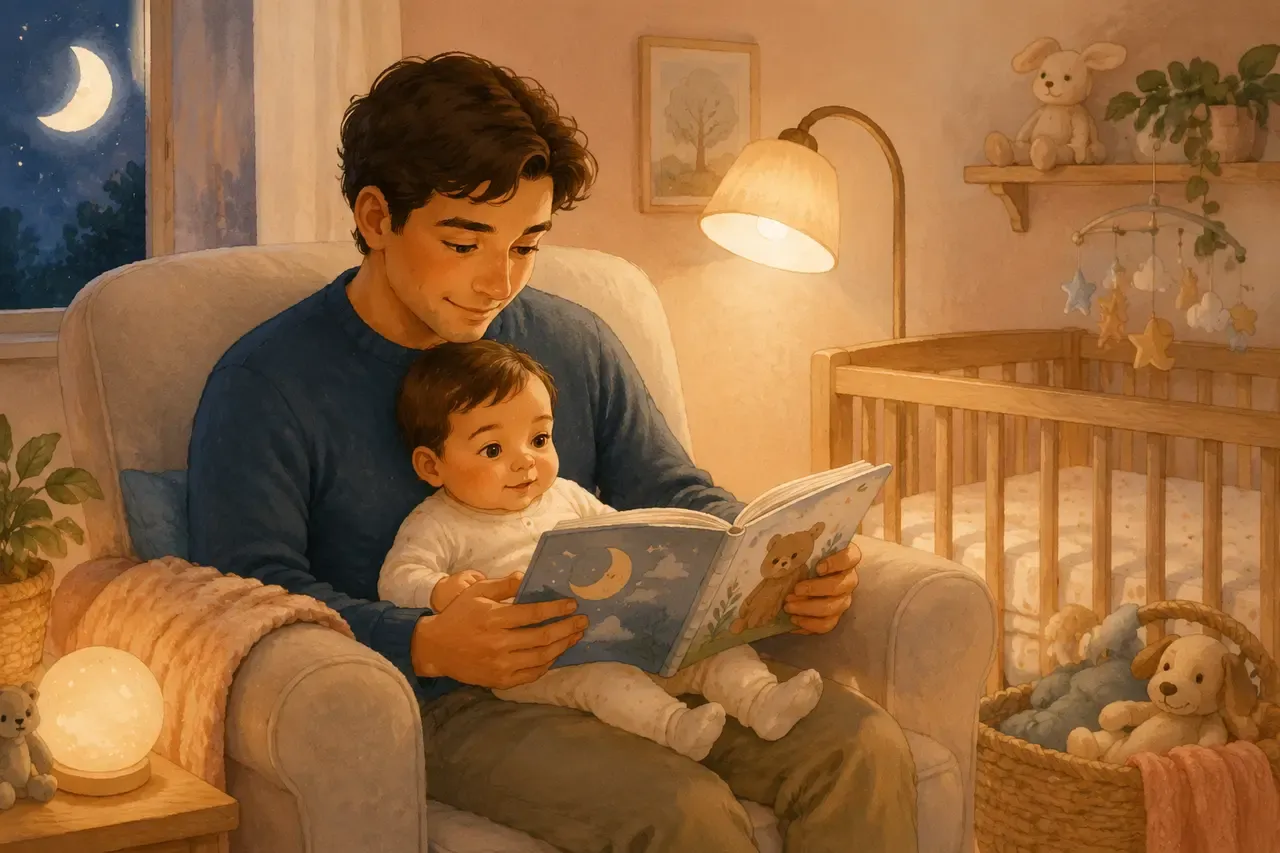
You can start reading to your baby from birth. The American Academy of Pediatrics recommends shared reading beginning in the newborn period.
Start with a few comfortable moments of your voice and attention; a newborn does not need to follow a plot or finish a book. The guide below shows how shared reading can change from infancy through toddlerhood, with flexibility for your baby’s interest and your family’s routine.
Newborn to 3 months: your voice is the story
A newborn is not listening for characters or a beginning, middle and end. They are becoming familiar with the sound and pattern of your voice.
Choose a quiet moment when your baby is awake and reasonably settled. Hold them safely, open a simple book and read for a minute or two. You can also describe one picture, repeat a rhyme or tell them about your day.
If they close their eyes, fuss, need feeding or turn away, stop. Finishing the book is not the goal.
At this age, a successful reading session might be only one page. The routine matters more than the page count.
Try:
- books with clear, high-contrast pictures;
- short rhymes with a steady rhythm;
- repeating the same calm phrase each night;
- reading slowly in the voice that feels natural to you.
You do not need to perform every character. A familiar voice is already interesting to a young baby.
Around 3 to 6 months: looking, listening and reaching
As babies become more alert, they may stare at pictures, track the book with their eyes or reach toward the pages.
This is a good time for sturdy board books, simple faces, animals and objects you can name. Instead of reading every printed sentence, follow your baby’s attention.
You might say, “There is the moon,” pause while they look and then turn the page. That is still shared reading.
The NHS includes reading a bedtime story as one possible step in a simple baby sleep routine, alongside dimmer lights, night clothes and a goodnight cuddle. The important word is routine: reading can become a predictable signal that the busy part of the day is ending.
Keep the session short enough that it stays calm. Two to five minutes may be plenty.
Around 6 to 12 months: let the baby explore the book
An older baby may pat, grab, mouth or try to turn several pages at once. This does not mean they dislike reading or are doing it incorrectly. Exploring objects with their hands and mouth is part of how babies learn.
Use durable books and supervise closely. Let your baby touch the page while you name what they notice.
Repetition becomes especially useful now. A familiar book allows your baby to recognize sounds, anticipate a favorite moment and spend less effort processing a completely new page each night.
You can make the experience interactive without turning it into a quiz:
- point and name: “A yellow duck”;
- copy an animal sound;
- pause before a repeated word;
- respond when your baby babbles;
- follow their gaze instead of insisting on the next page.
Back-and-forth sounds and gestures matter more than covering the whole text.
Around 12 to 18 months: short stories start to feel like stories
By the second year, many children can participate more visibly. They may point when you ask where an animal is, supply a familiar sound, choose between two books or bring the same book to you every night.
Their attention will still vary. One evening they may sit through a short story; the next they may turn three pages and climb away.
Keep the invitation consistent without forcing it. “It is book time” can remain part of the routine even when book time lasts only a few minutes.
Choose stories with:
- one clear idea per page;
- repeated words or phrases;
- familiar activities such as bathing, eating and saying goodnight;
- expressive but uncluttered pictures;
- a gentle ending rather than a highly exciting final scene.
At this stage, your child may begin to understand that the book itself stays the same while each reading can include a new comment, sound or question.
Do bedtime stories help a baby sleep?
A book is not a sleep switch, and reading should not be presented as a guaranteed solution for night waking or difficult settling.
Its practical value is predictability. A short sequence repeated in roughly the same order—feed, fresh nappy, dim lights, book, cuddle, bed—can help distinguish bedtime from active play.
The story should support the wind-down rather than restart the evening. If an animated reading voice, bright room or highly interactive book makes your baby more alert, simplify the experience. Lower your voice, choose a shorter book or move lively play-reading to daytime.
Bedtime reading also does not replace safe-sleep guidance. Keep loose books, pillows and toys out of the baby’s sleep space, and put the book away before placing your baby down.
How long should you read to a baby?
Start with what your baby can enjoy today.
For a newborn, that may be one or two minutes. An older baby may enjoy five minutes, especially when they can touch the book and join in. There is no minimum session you must complete for it to count.
Look for signs that your baby is available for interaction:
- relaxed body and face;
- looking toward you or the book;
- reaching, smiling or making sounds;
- settling into your arms.
Pause or stop if they repeatedly turn away, arch, cry, rub their eyes or become increasingly restless. Those signals do not mean reading has failed. They mean your baby is finished for now.
As attention grows, our guide to how long a bedtime story should be offers practical ranges for toddlers and children up to age eight.
What if your baby will not sit through a book?
Do less.
Read one page. Name one picture. Recite a rhyme while your baby lies beside you on the floor during awake time. Try again tomorrow.
You can also separate reading from bedtime while you build familiarity. A baby who is overtired at night may enjoy books much more after a morning feed. Once the book feels familiar, bring a very short version of the activity into the evening routine.
It is also fine to tell a story without a book. Describe a family photo, sing a nursery rhyme or repeat a tiny made-up story about a sleepy animal. The shared language and connection are still there.
Reading in the language you speak most comfortably is a good choice. Warm, natural interaction is more useful than struggling through a language because you think it is more educational.
A simple bedtime reading routine to try tonight
Keep the first version small:
- Finish feeding and other active parts of the routine.
- Dim the room while keeping enough light to see comfortably.
- Sit somewhere safe and supportive with your baby.
- Read one short book, a few pages or one rhyme.
- Put the book away and use the same goodnight phrase.
If your baby is content, repeat it tomorrow. Familiarity is not boring to a baby; it is how a pattern begins to make sense.
You do not need a special milestone, a large library or a baby who sits perfectly still. Start with your voice and one calm minute. The stories can grow as your child does.
When your child is ready for complete short tales, explore The Ant and the Dove for a gentle story about kindness or The Lion and the Mouse for a familiar animal fable.